gianpaolo baiocchi
sociology, broadly conceived
-
A TV Debate I participated in on Feb 25th 2019 on “The News Makers” on TRT. -
A short piece that appears in Africa is Country, from their excellent World Cup selection.
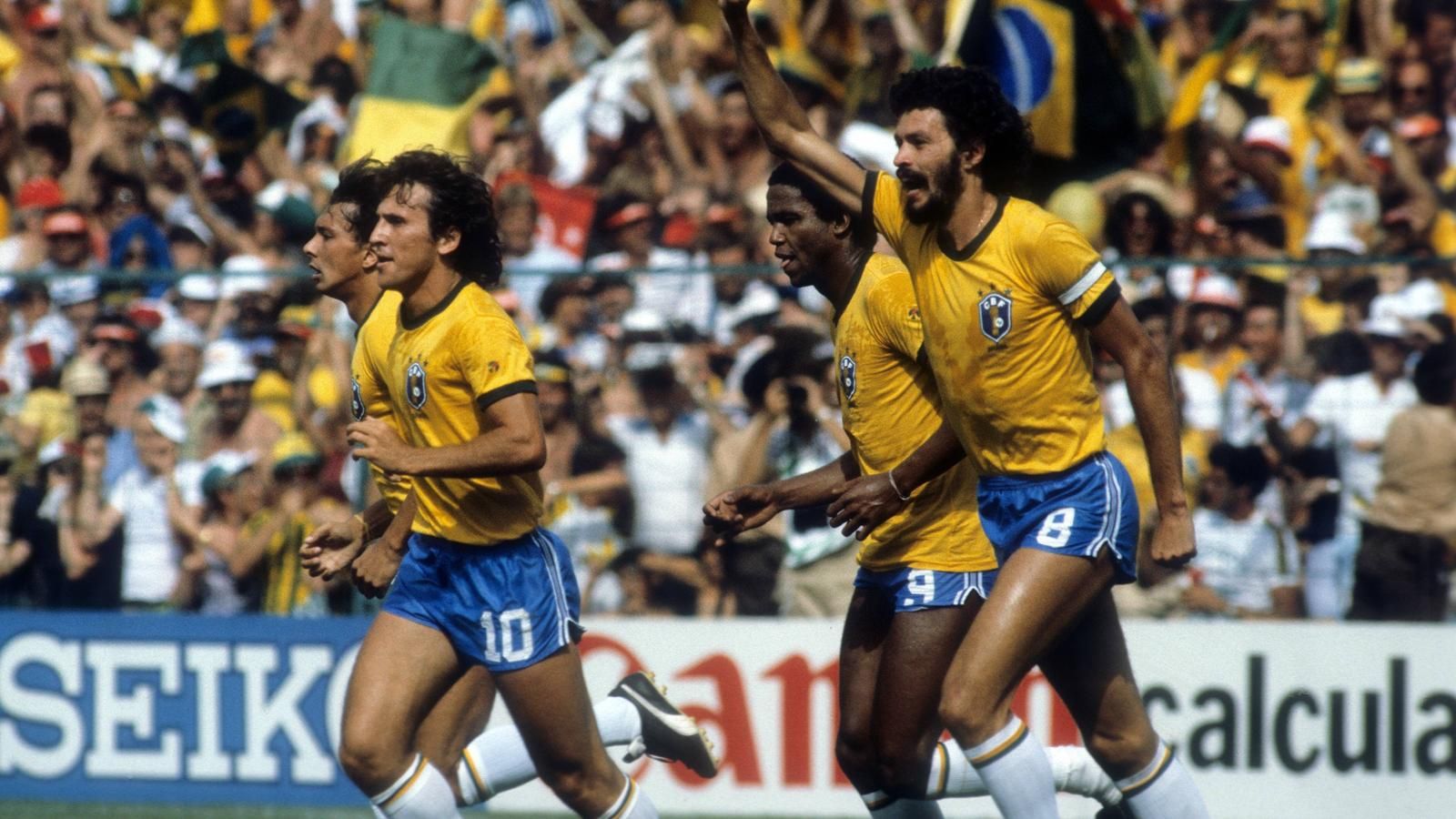
Zico and Socrates Canadians think that to put their flag on a backpack earns them safe-passage globally. They have no idea. Outside of Europe and North America, to show a Brazilian passport is to not only earn smiles but to instantly invite reverie about people’s memories of Pelé, Rivelino, Zico, Ronaldo and Ronaldinho; if not to hear their condolences, and maybe explanations, about Brazil’s humiliation during the 2014 World Cup. To travel most of the world with a Brazilian passport is to engage in one long, existential and extended conversation about Brazilian football.
It’s hard to fully appreciate the extent to which Brazil’s Seleção is the team of Everyone Else on the planet. From Haiti to India and Mexico, Brazil is almost always everyone’s second team, if not their first. Many cultures in Africa and Latin America have the figure of a trickster. In Brazil we have a team full of them at every World Cup. They are multiracial, oddly and singly-named (Hulk? Kaká?), often not especially physically gifted (or fit), but who manage to be the masters of improvisation, flair, and, most of all, beautiful and fun football. The history of the Seleção is full of legendary moments, their players seeming to do the impossible in their bright yellow and blue uniforms, defeating bigger and stronger opponents, not with strength, but with flashes of individual brilliance and art. They are postcolonial superheroes from a very fun and groovy future. Bandung may have fizzled but we will always have Pelé in 1958. And if you squint just so, you can almost imagine they are playing barefoot and not actually touching the ground.
A former combatant from the FMLN in El Salvador once told me he’d heard that Socrates, Brazil’s bearded and chain-smoking Marxist attacking midfielder, organized players to throw the 1982 quarter-final match with Italy as a way to snub the Generals and bring down the military regime. In the former guerilla’s account, government shelling of the rebels ceased for the duration of the match, broadcast on radio. But no one could understand the outcome of the game. I have a sharp recollection of that game, too. I was ten that July, when Italy’s Paolo Rossi sent home the amazing team that was going to finally earn the glory denied the country since 1970. After matches, I would go outside with my friends and imitate the moves of the players, Socrates’ heel-kicks, Zico’s gentle penalties, and Falcão’s improbable runs. Brazil’s incomprehensible defeat that afternoon sent many of us outside, away from the TVs, there in the outskirts of São Paulo. I remember walking in disbelief down the middle of an empty street and an adult, maybe a friend’s dad, pulled me aside and whispered that I should not be sad because, for sure, this would surely hurry the end of military rule.
Over the years I have often thought about that account. It is true, of course, that the regime had a lot of interest in the national team, and probably vetoed Reinaldo, Rei (“King”) an amazing striker prone to making black power salutes. (He was later a politician in Lula’s PT.) They might have also vetoed Zico and the outspoken Socrates, had they not been so famous, and frankly, so good. Zico was one of the founders of the country’s first union of football players in Rio in the late 1970s, while Socrates led Democracia Corinthiana, a hugely important participatory democracy movement within his team, and was very public in the movement for direct elections that started in 1983.
The former FMLN guerilla’s theory is almost certainly not true, though. If nothing else, a victory might have given Socrates – so outspoken – an even bigger platform. There has been so much reflection and recollection about that day and it is clear that the team really wanted to win. But they simply couldn’t. It happens. But it is nice to think that the men in the canary-yellow jerseys with their super-human powers might have had another plan that included bringing down dictators and the powers to do so.
As of this writing, we don’t know who will win the World Cup, but we know it will be an European team again (France play Croatia in the final on 15 July 2018). Like every time but twice in the last three decades, the title will remain in the continent that invented the game in first place. Of course, there is hope that the rainbow face of today’s European teams, the amazing talent of the Mbappes and Pogbas of this world, will help bring along a reimagining of what a Europe can be, or at least make it slightly more friendly to immigrants and their children who call the continent home.
But it will still be an European team. We were taught as kids that football was the people’s sport because unlike most other sports you don’t need any equipment to play, just a surface and a round object. And having “happiness at your feet”–as Brazil’s coach likes to say of Neymar–was what made the difference and a Brazilian’s birthright. Nowadays, though, to win internationally you need other things, too. Like an organized infrastructure from youth clubs to professional leagues, the latest fitness and training regimens, constant exposure of your players to high-level international club play, and access to technology for coaching, among other things. Of course, as pundits are saying, that almost does not exist outside of Europe. Brazil’s own football infrastructure is in shambles, a shadow of earlier glory days, some teams essentially reduced to talent farms for foreign scouts.
But ,as I tell my kids, heartbroken over yet another Brazilian defeat at the hands of an European team, this does not rule out Brazil in the future. Of course, we have no Socrates to defend democracy today. And sure, much is stacked against Brazil. But I tell them the story of 1982 and of Brazil’s importance in so many places. But most of all I tell them about that, in the end, their gift has always been about mastering the improbable.
-
A short piece by Marcelo K. Silva and myself that appears in NACLA.
Jair Bolsonaro has propelled anger and vitriol against the Left, the poor, and so-called identity politics to the surface of Brazilian society. After his win, what’s next?October 29, 2018Gianpaolo Baiocchi and Marcelo K. Silva
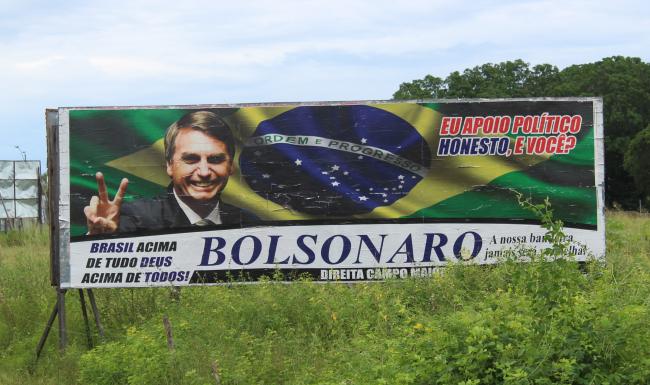
A Bolsonaro campaign ad on a highway in the northeast state of Piauí (Almanaque Lusofonista/Wikimedia Commons)
Brazilians woke up this Monday morning to a nearly unrecognizable country in the aftermath of the most polarized election in generations. On one side, retired captain Jaír Bolsonaro, a self-styled strongman and defender of torture from the far-right promising to rid the country of crime, leftism, political correctness, and red tape. Powered by WhatsApp bots, and fueled by anti-workers’ party sentiment, this was no ordinary right-wing campaign: there were no televised debates, few rallies, and an almost entire absence of god-and-country swag like bumper stickers. On the other side was Fernando Haddad, university professor, the former Mayor of São Paulo and a former Minister of Education. The son of Lebanese migrants and soft spoken to a fault, Haddad, who had only been the official candidate for a month, headed a diverse pro-democracy coalition to try to stave off the country’s descent into authoritarianism.
After a nearly-decisive victory on October 7, in which the level of Bolsonaro’s lead surprised most observers, the country headed to the run-off on Sunday, October 28. Bolsonaro won handily, earning 55% of valid votes to Haddad’s 45%, who increased his support from just 28% in the first round. The hard-right wave that Bolsonaro led also brought dozens of anti-establishment far-right candidates to office throughout the country, upturning all expectations and rules of elections. His own party, the previously insignificant Social Liberal Party (PSL), which had just one member in congress in 2010, now holds 52 elected seats in the chamber of deputies and four in the senate, the second largest presence in parliament. Bolsonaro’s son was elected to congress in São Paulo with the highest vote of any candidate in history. Other right-wing outsider candidates elected included a former porn actor, a member of the Brazilian royal family, a conservative newscaster, and twenty former military or police officers. And 18 of the 27 elected governors in this election are conservatives. Social media and coordinated fake news campaigns played an unprecedented role, while the center-right essentially vanished as a potentially moderating electoral presence. This was also a very disillusioned election: over 30% of voters either nullified their vote, voted blank or abstained, the highest figure since the transition to democracy. But most dramatic has been the way that the campaign has brought to the surface an angry vitriol against the Left and activism, against the poor, and against so-called identity politics.
Bolsonaro himself, in the aftermath of the first round election, announced that, once president, he was going to, once and for all, “put an end to all activism in the country.” If people had been worried about his bombast before, it was the escalating rhetoric and increasing acts of violence by Bolsonaro supporters in the days that followed that sent growing numbers into a panic about what the future might hold. The murder of 63-year capoeira teacher, Moa do Katendê, over his support of Haddad was one of a catalyzing number of events. The simultaneous invasion by military and federal police of dozens of public universities on October 25 was another.
In the days before the run-off election, a broad yet uncoordinated effort against Bolsonaro ensued, which was as desperate as it was restless. In many cases, these efforts were motivated less by an endorsement of Haddad than a fear of an eventual Bolsonaro presidency. Joining other groups that had long rejected Bolsonaro, like the #EleNão campaign, countless groups and individuals took to social media, to door-knocking and to street-campaigning. These efforts came from the ranks of anarchists, socialists, communists, environmentalists, feminists, Black, Indigenous, and LBGT activists, trade unionists, artists, professional organizations, students, Christian progressives, and many others From Jews Against Bolsonaro to the Evangelical Front for the Rule of Law, to the Landless Movement there were last-ditch efforts throughout the country to try to stop the descent into authoritarianism.
In the end, though these efforts did have an impact on the polls, increasing Haddad’s showing by 16% from the first round, it was too little too late.In the end, though these efforts did have an impact on the polls, increasing Haddad’s showing by 16% from the first round, it was too little too late. By early Sunday evening, fireworks were being lit from the top of luxury high-rises in some of the country’s wealthiest cities as the first results came in. By 7 PM, the contest was over, with Bolsonaro winning by a margin of more than ten million votes. His first pronouncement was a speech that was broadcast on Facebook that returned to his familiar campaign themes of God and Country, the dangers of socialism and communism, the importance of a free market, and attacking the media. Shortly after, he gave a speech that was broadcast on all networks that was more conciliatory, saying he would respect the constitution as president.
It is hard to predict what will happen next in Brazil, but the scenario before us is extremely worrying. First, of course, is the immediate threat to human rights and lives. Bolsonaro supporters are fond of saying that it important to separate his bombast from the actual policies his government will carry out. The problem with that line of argument is that if the weeks leading up to the election are any guide, the extreme-right campaign that he has led has actively inspired many acts of violence and intolerance. It is likely this wave will continue, but now with even greater impunity. Brazil already has only the thinnest protections of rights to begin with—it sadly suffers from alarmingly high homicide and police violence rates; and whatever protections vulnerable populations have had in Brazil will in all likelihood be undone. And even if Bolsonaro himself does not have planned policy items for some of his most outrageous statements—such as declaring leftist social movements terrorism, or decrying the existence of Indigenous territories—he comes into office with a large cohort of ultra-right and anti-establishment politicians who will be competing with each other to find ways to do so. One elected candidate, a former police officer from the Southern state of Paraná, became infamous for his action-movie like campaign videos, while another, a woman police officer from São Paulo frequently showed images of a police raid in which she killed an alleged robber.
It is also probable that many of the social gains of the last two decades—Bolsa Família, the cash transfer program, affirmative action policies, and the expansion of access to education, construction of housing for the poor, improved access to basic healthcare—will likely be reversed or severely reduced under a Bolsonaro administration, which promises to reduce social spending and all manner of “pity policies” for “northeasterners, gays, blacks, and women,” severely reduce economic regulation and workers’ rights, do away with several ministries, and privatize state companies, all deemed “unnecessary costs.” Bolsonaro’s government program reads like an upside-down catalog of every successful major progressive policy in the country since the 1990s.
But perhaps the biggest change this victory signals is that it definitively reverses Brazil’s process of democratization that began in the 1980s as the country transitioned from a two-decade military dictatorshipBut perhaps the biggest change this victory signals is that it definitively reverses Brazil’s process of democratization that began in the 1980s as the country transitioned from a two-decade military dictatorship. Pro-democracy social movements played a central role in both bringing about the end of the regime and in the transition period. Since then, political contests had coalesced around a center-right and a center-left poles, led by the Brazilian Society Democracy Party (PSDB) and the Workers’ Party (PT), respectively. This political arrangement has essentially been destroyed in the political crisis that has engulfed the country since 2013 and that intensified with Dilma Rousseff’s impeachment in 2016. Not only did institutions lose legitimacy, so did major political parties, paving the way for politicians like Bolsonaro.
But democratization also meant addressing inclusion in this highly unequal country. For the last three decades, social and political forces had organized around a democratic-popular project centered around the PT, something that set them apart from earlier leftist visions in Latin America. The idea was to produce social transformations through democratic means, investing in democratic institutions while also maintaining extra-institutional pressure. Whether speaking of affirmative action in universities, domestic workers’ rights, protection against domestic violence, or educational programs on homophobia in primary schools, the dozen years of PT national administration produced changes, that however small, touched many of Brazil’s inequalities. Despite the fact that the PT advocated a “third way” which was conciliatory and friendly towards capital, these policies provoked conservative backlashes that confronted not only leftist opponents, but democracy itself.
The end of democratization in Brazil harkens back to prior moments in Brazil when social pressures that challenged inequality faced an authoritarian rupture. This is what happened in 1930, and then again in 1964. The first time, it took 16 years until the return of democracy; the second, 21. Now, as we face dark days ahead, with hobbled institutions, weakened political parties, and only the thinnest veneer of protections for the most vulnerable and for dissent, we must remember that Brazil’s democracy, however imperfect, had accomplishments worth defending.
Gianpaolo Baiocchi is an activist and scholar based in New York City, where he directs NYU’s Urban Democracy Lab. His most recent book is We, The Sovereign (Radical Futures, 2018).
Marcelo K. Silva is a professor of sociology at the Federal University of Rio Grande do Sul in Porto Alegre, where he directs the research group on associativism, engagement, and contestation.
-
 Brazilian Democracy in Peril
On March 14, Brazil was shaken by the killing of Marielle Franco in Rio de Janeiro, where Franco served as a leftist city councilor representing the favela community of Maré. Franco had recently been named to head a commission investigating military abuses during President Michel Temer’s February “anti-gang” deployment in Rio. A human rights activist beloved by her community, Franco was also one of the only black LGBT elected official in the country. She had just attended a roundtable discussion of Afrofeminist youth when unknown assassins opened fire on her car, using bullets traced back to the federal police.
Marielle Franco represented a progressive new left, built on advocating for Brazil’s most vulnerable citizens, making her murder doubly tragic.
Despite its unique horror, Franco’s murder can best be understood as the latest episode in the political crisis that has engulfed Brazil since the months before the 2016 impeachment of President Dilma Rousseff, a member of the center-left Workers’ Party. The appeal of far-right politics and a general distrust of democratic institutions is rising in worrying ways as the country faces its next scheduled elections in November. One of the fastest-rising candidates, riding the wave of this revanchism, is the ultra-right Jair Bolsonaro, “Brazil’s Trump,” an avowed fan of Brazil’s 1964–85 military junta who regularly serves as public apologist for police violence and torture, and who last year was censured in Congress for telling a leftist congresswoman that she was “too ugly to be raped.”
Every time there is political upheaval in Brazil, there is some talk of military intervention and a return to dictatorship, but it is usually limited to fringe figures and shadowy military generals. This time, though, things are different. From Facebook to talk radio, nostalgia for authoritarianism—and fret about the excesses of democracy—have become prevalent, and increasingly figures in the speeches of politicians such as Bolsonaro. Open expressions of homophobia, sexism, and racism are continuing to gain traction in response to the perceived overreach of political correctness under the previous dozen years of Workers’ Party rule. More broadly, there is a widely-held belief that democratic institutions have failed; that the courts are partial and political instruments; and that political parties are uniformly corrupt.

It is worth remembering how we got here.
In late January, former president “Lula”—Workers’ Party’s Luiz Inácio Lula da Silva, who held office from 2003 until 2011—faced an appeal hearing following his September conviction under Operação Lava Jato (Operation Carwash), a wide-ranging corruption investigation. The allegations revolved around an apartment Lula allegedly bartered in exchange for preferential treatment for government contracts. The original trial did not actually produce a single piece of documentary evidence, despite months of investigation and wiretaps. This however did not stop the judges, who were also the prosecutors, from finding Lula guilty. A second court affirmed the original conviction and lengthened the sentence to twelve years. Now Lula’s case is before the Supreme Court, where it seems unlikely that he will prevail or be permitted to continue his run for president.
If Operation Carwash was a hit job aimed at the Workers’ Party, its aim went wide, taking out nearly all other democratic institutions with the same spray.
Yet Lula remains an extremely popular figure in Brazil, particularly among the poor, and is currently leading the polls by a wide margin. He has declared he will not seek asylum elsewhere, and will instead stay and fight for his innocence, even if he must do so from prison.
A case of anti-corruption politics gone awry, Operation Carwash has implicated politicians from all major political parties and construction companies, as well as the state-owned oil company, Petrobrás, yet the operation has selectively prosecuted politicians from the Workers’ Party. For its part, Globo—the Brazilian media giant known for its anti-left bias—has been presenting Operation Carwash much like a round-the-clock soap opera, replete with a handsome protagonist, prosecuting judge Sérgio Moro, and a cast of unsavory villains such as Lula and Rousseff. This media circus has energized elite Brazilians who feel that they have been excluded during the three terms of Workers’ Party rule, which saw the enactment of affirmative action programs and cash transfers to the poor.
Michel Temer, who became president upon the impeached of Rousseff in 2016, is today often described as “the world’s least popular president”—and indeed, some polls have him pulling single-digit approval rating. Prior to her impeachement, Temer had been Rouseff’s coalition partner and vice president, a kind of Faustian bargain between the Workers’ Party and Temer’s right-leaning Brazilian Democratic Movement. But as political winds shifted, Temer (himself indicted by Operation Carwash) played no small part in orchestrating Rousseff’s ouster. Upon his swearing-in, he promised a program of clean government and market orthodoxy, his so-called “Bridge to the Future”: government austerity, loosened labor laws, reductions in pensions and taxes, and wide-ranging privatization.
Temer and his legislative allies actually managed to pull off some of this platform, notably passing a constitutional amendment that freezes social spending for the next twenty years. Temer has also overseen significant rollbacks in labor rights—but his political capital was quickly exhausted. Beginning in January 2017, a series of militant protests and strikes around the country opposed his proposed pension reforms. At the same time, very serious corruption allegations came to light involving Temer, including an attempt to buy the silence of a convicted politician. Temer soon faced the prospect of impeachment himself, and although he was able to kill it in Congress, the cost was huge, doling out favors left and right to buy the votes to save his neck. Even for elites who had supported the impeachment, the hypocrisy was too much. Since then even the right wing has been distancing itself from Temer, who now finds himself an isolated figure.
From Facebook to talk radio, nostalgia for authoritarianism—and fret about the excesses of democracy—have become prevalent.
The impeachment of 2016 left the country deeply polarized, and also established a set of terrible precedents: that unpopular presidents can be impeached simply for being unpopular; that laws matter less than popularity; that Congress is less a place for debate than for making deals; that political office can be openly used for individual gain; and that laws can be bent to suit the interests of the powerful. And all of these have been confirmed in the popular imagination by subsequent events.
And now both the left and right are in disarray. Lula is unlikely to be able to run for president, though he is still campaigning. From the progressive sector there is no agreement on what an alternative candidate or strategy might be. Social movement activists have managed to energize a base and coordinate across cities, successfully lighting revolt against Temer’s policies. But the energy of the streets is, as of yet, disconnected from the political parties. The Workers’ Party, for so long the traditional channel for social-movement energies, is seen by activists, particularly millennials, as too close to the establishment and status quo politics. There is agreement that neoliberal policies must be stopped. But there is little sense of what alternative routes might be. Franco was seen by some as representing a progressive new leftist politics, organized around advocating for the country’s most vulnerable citizens, making her murder doubly tragic.
Conservative forces, however, are faring badly too. Nearly all nationally prominent figures from right-of-center parties have now been linked to corruption. While most are at-large and continue to exercise their functions (nearly half of Congress is implicated in corruption investigations), so far no one has emerged who appears to be able to articulate a broader coalition, let alone negotiate with political opponents. If Operation Carwash was a political hit job aimed at the Workers’ Party, its aim went wide, taking out nearly all other parties and democratic institutions with the same spray.
And this is the worrisome scenario in which we find ourselves. Some pessimistic analysts are predicting elections will not take place in November, given the lack of viable options. Our worry is actually more immediate: calls for law and order, for military intervention, for a state of exception, and for criminalizing dissent are becoming more common and seem to gain currency every day. At the same time, wildcard political outsiders are giving voice to resentment and anger in ways that stoke the basest authoritarian instincts of the populace. The question now before the country is whether incidents such as the violence that took Franco’s life will spark outrage or simply be accepted, as so much else is, under this new dispensation.
Source: Brazilian Democracy in Peril
-
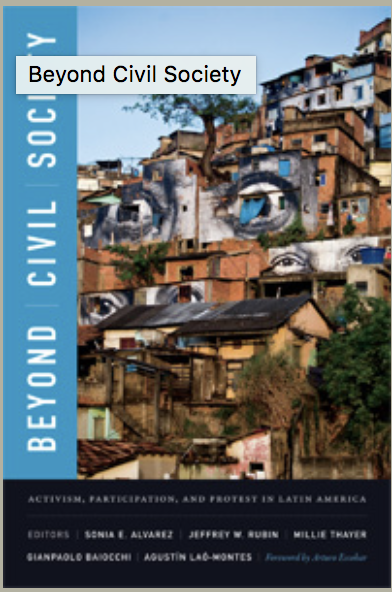
Happy to report that Duke UP has released Beyond Civil Society: Activism, Participation, and Protest in Latin America, edited by Sonia Alvarez, Millie Thayer, Jeff Rubin, Agustin Lao-Montes, and myself. You can read the foreword and intro here.
The contributors to Beyond Civil Society argue that the conventional distinction between civic and uncivic protest, and between activism in institutions and in the streets, does not accurately describe the complex interactions of forms and locations of activism characteristic of twenty-first-century Latin America. They show that most contemporary political activism in the region relies upon both confrontational collective action and civic participation at different moments. Operating within fluid, dynamic, and heterogeneous fields of contestation, activists have not been contained by governments or conventional political categories, but rather have overflowed their boundaries, opening new democratic spaces or extending existing ones in the process. These essays offer fresh insight into how the politics of activism, participation, and protest are manifest in Latin America today while providing a new conceptual language and an interpretive framework for examining issues that are critical for the future of the region and beyond.Contributors. Sonia E. Alvarez, Kiran Asher, Leonardo Avritzer, Gianpaolo Baiocchi, Andrea Cornwall, Graciela DiMarco, Arturo Escobar, Raphael Hoetmer, Benjamin Junge, Luis E. Lander, Agustín Laó-Montes, Margarita López Maya, José Antonio Lucero, Graciela Monteagudo, Amalia Pallares, Jeffrey W. Rubin, Ana Claudia Teixeira, Millie Thayer
-
Despite recent interest in political ethnography, most of the reflection has been on the ethnographic aspect of the enterprise with much less emphasis on the question implicit in the first word of the couplet: What is actually political about political ethnography and how much should ethnographers pre-define it? The question is complicated because a central component of the definition of what is political is actually the struggle to define its jurisdiction and how it gets distinguished from what it is not. In this article we aim to show how ethnography can actually lead us out of this conundrum in which the political is paradoxically both predefined and, at the same time, the open question that leads the process of inquiry. We do so by advancing a formal and relational approach that provides us with procedural tools to define the nature and specificity of the political bond not ex ante, but rather during the process of research itself. In the first part of the article we historicize the development of political ethnography as a distinct avenue for inquiry and show what have been the challenges to its normalization. This is followed by the article’s main section, which focuses on the four ways in which what is political has been conceptualized in contemporary socio-ethnographical literature. In the conclusion of the article, we advance a lowest common denominator definition proposal, with examples from other scholars as well as from our own research to illustrate how this approach would work.
Keywords
Conceptualization Context of discovery Ethnography Politics Sociology of knowledge
-
This review appears in Contemporary Sociology here
Employment and Development Under Globalization: State and Economy in Brazil, by Samuel Cohn. 2012. Palgrave McMillan. 236pp cloth.
Gianpaolo Baiocchi
NYU
Samuel Cohn’s latest book, Employment and Development under Globalization: State and Economy in Brazil, uses the case of Brazil to revisit some of the classic debates in development and make a case for the usefulness of “Palliative Development,” alongside the better-known strategies of “Transformative Development.” Palliative development, for Cohn, “is concerned about the economic benefits of growth being widespread [and is] opposed to the benefits of development being limited to a select few.” (p. 2) It emphasizes stimulating “small, labor intensive enterprises that provide services to the local population.” (p. 180) This focus stands in sharp contrast to more common analyses of “economic miracles” and rapid social changes.
The book draws significant inspiration from O’Connor’s (1973) classic account of the fiscal crisis of the state and extends that argument to look at the developmental state. As is well known, O’Connor argued that the state manages the externalities of capitalism, while assuring an environment propitious for profit. It does so by different kinds of public spending, but is constantly in threat of fiscal crisis because of revolt by competitive sectors of capital that resist paying taxes. Cohn, in extending this to development, argues for the centrality of state investments in public goods like infrastructure, as well as the constant threat of fiscal constraints that could disable those mechanisms.
Brazil, of course, is today both a marquee case of the possibilities and limits of BRICS countries, a symbol of the possibilities of the “Pink Tide,” and a traditional national case in development studies. Cohn uses the case of Brazil in the last decades as a way to argue for a renewed look at the importance of state policies in reproducing capitalism, particularly in the post 1980s moment, when debt and the pressures of globalization made earlier strategies reliant on Import Substitution and heavy state investments unviable. Like with other recent optimistic accounts of the Brazilian model (such as Montero’s Brazil: Reversal of Fortune), Cohn spends some time analyzing a number of successful, pro-poor, pro-development, creative, and efficient policies. But unlike most other accounts, he does focus on headliner industries, like Brazilian aviation or auto, or even on well-known social policies, like Bolsa Familia. He focuses instead on small, and relatively prosaic policies that exemplify palliative development.
With an admirable amount of empirical rigor, and based on a decade of research throughout the country, Cohn sets out to test the impact of these specific policies on employment using official data and econometric modeling. He first explores the what-if scenario of no government intervention on employment through residuals analysis, finding, (perhaps not surprisingly), that intervention is impactful. Much of the subsequent analysis delves into the outcomes of specific policies: he looks at the effect of vocational education, the creation of infrastructure, rent control of commercial spaces, tax reduction strategies, and the opening of frontiers. He examines employment in “hotels, restaurants and barber and beauty shops in Brazil from 1940 to 2000.” (9) The overall findings are that some of these policies, particularly the creation of airports, job training and vocational education, downtown rent control, and the opening of frontiers – have significant and positive outcomes in terms of employment. Reducing taxes on employers, on the other hand, does not. The book closes with a series of lessons from the Brazilian case for development policies elsewhere.
There is no doubt the book is an important account by a leading sociologist of development that calls for a recalibration of development studies in the current era. It is precisely argued, brings a wealth of data to make its case, and fundamentally asks scholars to shift their gaze. But perhaps because the book opens up new terrain, it also raises a number of questions. Arguably, the book is less attentive to “politics” (either more formal or the social movement kind that has been so important in Brazil) than either O’Connor’s original account or other accounts of the Brazilian developmental state, such as Peter Evan’s 1979 classic Dependent Development. It is not the book’s purpose to analyze these dimensions, but there are lots of specificities of Brazilian developmental state, and therefore, the conditions of possibility for the reproduction and applicability of these policies elsewhere. Some of these policies begun in dictatorship-era Brazil, when there was a specific political calculus of the state vis a vis monopolistic and competitive sectors of capital that made some of these policies more likely in the first place. There are other questions to be asked, too, of popular demand (or even tolerability) for certain policies or not in more democratic contexts. “Frontier development” in Brazil dates back to dictatorship era “colonization” strategies that have often had disastrous socio-environmental impacts and worsened patterns of concentration of land (which Cohn briefly discusses). These questions, of course, do not take away from the book’s very significant achievements, which are to put a number of new questions about policies that may be less glamorous, but ultimately more important, for development.
Evans, P. B. (1979). Dependent development: The alliance of multinational, state, and local capital in Brazil. Princeton, N.J: Princeton University Press.
O’Connor, J. (1973). The fiscal crisis of the state. New York: St. Martin’s Press.
-
Marcelo K. Silva and I wrote two pieces for Al Jazeera America, one earlier on, in March of last year on the Elite Revolt, and then one in December on the Impeachment Dilemma.
I re-post them here to have them all in one place. It’s sad how correct they were about the right-wing origins of the coup.
Brazil’s impeachment dilemma
Left-wing movements want to prevent President Dilma Rousseff’s removal without endorsing her policies
Even in a country whose political history is full of tragicomic moments, last week’s impeachment proceedings against Brazil’s President Dilma Rousseff stand out as especially theatrical. For several weeks, politicians from the right and center-right opposition parties threatened to move in Congress against Rousseff, who leads the left-wing Workers’ Party.
Since the beginning of her second term, the beleaguered Rousseff has been dealing with a wide-ranging corruption investigation that has uncovered evidence of massive graft across the private and public sectors. Emboldened by conservative mobilizations in the streets, the media have been marching to the drumbeat of impeachment for months, and the currency is in free fall.
The only person who may initiate the impeachment process, though, is the speaker of the house, Eduardo Cunha of the centrist Brazilian Democratic Movement Party (PMDB), nominally an ally of the ruling coalition. He too has been dogged by ethics charges, owing to recently surfaced evidence of graft and secret Swiss bank accounts in his name worth millions of dollars. The ethics committee he faced was made up of legislators from various parties, including the PMDB and the Workers’ Party.
Within hours of Workers’ Party representatives announcing they would vote against him in the ethics committee, Cunha formally initiated impeachment proceedings, in an apparent act of retaliation, exacerbating Brazil’s ongoing political turmoil. Vice President Michael Temer, also of the PMDB, has been silent in recent days. Some observers have interpreted this as a signal that he might support the impeachment as a way to ascend politically.
For impeachment to succeed, it must first survive legal challenges mounted by government lawyers, then clear a congressional committee and Congress before moving to a Senate vote, where the impeachment would take place. Although the corruption scandal has ensnared members of all major parties, Rousseff’s name has not appeared in any of those allegations. The legal claim for the impeachment is a technicality concerning the national budget: releasing funds from one year’s budget to the next, a questionable but widely practiced fiscal maneuver in Brazil at all levels of government.
Legal opinions aside, whether impeachment happens will have less to do with technicalities than with political alliances and mobilization in the next weeks. At the moment, the numbers appear favorable for Rousseff, with enough legislators opposing the process in both houses of Congress to defeat it. A number of important figures from other political parties have come out against impeachment, as have major civil society organizations, including the National Association of Lawyers and the National Conference of Bishops. They are united in defense of democracy and its institutions rather than in support of the Workers’ Party or Rousseff.
But it is still early, and the government has an interest in holding votes on impeachment as soon as possible. Members of the congressional coalition could desert the president and shift the balance against her, and analysts predict that social mobilizations against her could start up again, especially after Carnival in February.
Avoiding a coup is a priority, but restoring the progressive project now that the national Workers’ Party seems to have abandoned it is a longer, much more elusive goal.Beyond the congressional numbers game, there are fundamental social conflicts at work. Brazil today is in its most politically polarized state since the return to democracy in the mid-1980s. Like other countries in Latin America, Brazil is facing a wave of discontent and a backlash against the redistributive projects of the so-called pink tide that appeared to dominate the region in the mid-2000s. From Argentina to Venezuela to Paraguay, conservative political forces have gathered momentum in recent years by leveraging middle-class dissatisfaction with the policies of center-left governments.
Though Brazil is undergoing a conservative backlash, it is not clear that conservative forces will be able to rally around the impeachment. Congress is more conservative than at any other time in recent memory, and there is an openly right-wing discourse in Brazil that was unknown just a few years ago. But large-scale right-wing mobilizations driven by hostility to the Workers’ Party and corruption, which had been taking place regularly since 2013, seemed to run out of steam in the last few months. As corruption investigations have decisively implicated all political parties, it has become difficult to justify protests only against the Workers’ Party. That Cunha, the man leading the impeachment process, is deeply implicated in graft schemes has undermined the anti-corruption wave.
Moreover, calls on the far right for a return to military dictatorship have alienated more moderate allies. Rousseff is an unpopular but democratically elected leader, and to many Brazilians, it seems contradictory to campaign in favor of democratic institutions while supporting a white coup against the president.
On the other hand, whether the Workers’ Party will be able to maintain a progressive majority, both to survive the impeachment and then to successfully govern, is an open question. Some analysts have argued, not entirely without cause, that the threat of a coup could realign progressive forces in Brazil, ultimately conferring new legitimacy on the president. And it is true that the impeachment process has brought out energized supporters as well as left-wingers who had abandoned the Workers’ Party in recent months.
But Rousseff has become very isolated from her base. Since the beginning of the year, the national government has found itself carrying out increasingly neoliberal economic policies in an attempt to improve a stalled economy and reinvigorate investor confidence. Workers’ Party legislators have found themselves making deals in Congress to approve measures the party has historically opposed, alienating its traditional social movement and union base.
In October, in response to the downgrading of the country’s credit rating, Rousseff announced a multibillion-dollar austerity package that promised severe cuts across all areas of government, including abolishing 10 of the country’s 39 ministries. A stopgap measure meant to assure investors and arrest the currency’s months-long free fall, the plans threaten several of the government’s important projects, including its marquee housing and social programs.
In recent days, traditional allies of the Workers’ Party, including the national unions and progressive social movements such as the student movement and the landless movement, have come out against the impeachment, promising to take the struggle to the streets as long as necessary and using slogans that evoke the resistance movement that fought the 1964 military coup. But these movements are still searching for a way to support the government without endorsing its recent policies. Avoiding a coup is a priority, but restoring the progressive project now that the national Workers’ Party seems to have abandoned it is a longer, much more elusive goal.
The views expressed in this article are the author’s own and do not necessarily reflect Al Jazeera America’s editorial policy.
-
En Madrid, el nuevo Gobierno acaba de abrir un proceso participativo para preguntar a sus habitantes cómo debe ser el futuro de uno de sus rincones más emblemáticos, la Plaza de España. Harán una encuesta a la población para establecer las condiciones de la obra y después una votación entre los proyectos urbanos finalistas.
Ernesto Ganuza y Gianpaolo Baiocchi
Ernesto Ganuza es investigador del IESA/CSIC y Gianpaolo Baiocchi es profesor en la Universidad de New York.

Plaza de España, Madrid
En Alicante, el nuevo gobierno va a preguntar a la población cómo gastar una parte del presupuesto, como quieren hacer en A Coruna o ya están haciendo los nuevos ediles de Badalona. Muy cerca, en Barcelona tienen pensado organizar cientos de grupos de discusión con sus habitantes para elaborar un plan estratégico. Y el municipio de Getafe va a retomar de nuevo los presupuestos participativos que tenían hasta el 2011, cuando el gobierno del PP ganó la alcaldía y decidió entonces parar la experiencia. Desde las últimas elecciones municipales se multiplican las ofertas participativas. Es como si la política se hubiera vuelto de repente hacia el ciudadano.
El mapa electoral que salió de las elecciones municipales del 2015 ha cambiado por completo el color de muchas alcaldías, que pasan a ser gobernadas por los nuevos partidos surgidos de las protestas, IU o los socialistas. Este terremoto no es nuevo, ya pasó en las elecciones del año 2011, pero a la inversa. Entonces fue el Partido Popular el que alcanzó la alcaldía de innumerables municipios, gobernados por la izquierda. Los dos momentos dibujan dos formas distintas de hacer la política local. Con el ciudadano o sin él. Si votar tiene implicaciones, estas se multiplican al considerar la participación. Durante el periodo 2011-2015 muchos municipios bajo el mandato del PP abandonaron sus proyectos participativos, mientras que ahora muchos de esos municipios los retoman o inician nuevos proyectos.
Referente europeo
Si en los próximos años es más que seguro que asistamos a una proliferación de experiencias participativas extraordinaria, no será algo del todo nuevo. Hasta el año 2011, España era un referente europeo en cuestiones participativas. No había país en el continente en el que encontráramos tantas experiencias y, sobre todo, en las que buena parte la ciudadanía decidiera directamente sobre las políticas públicas. Cuatro años después, los nuevos partidos, que llevan la participación en su ADN, y las viejas guardias de la izquierda van a retomar esa senda. Hay ingredientes nuevos. Antes no existían Ganemos, las Mareas, Ahora Madrid o Barcelona En Comu, cuya retórica sobre participación es más genuina y es previsible que sus proyectos impacten significativamente sobre lo que se hace en el resto de municipios. La novedad siempre genera imitadores. No obstante, intuimos que esta re-emergencia volverá a traernos otra vez las tensiones que fueron habituales entonces y que llevaría, por ejemplo, a la misma alcaldía de Córdoba que impulsó el presupuesto participativo en el 2001 a dejarlo perecer por inanición unos años más tarde (2006).
En el fondo, la participación plantea conflictos serios para una tradición política basada en el saber de los profesionales y la representación. Su desarrollo suscita, por eso, muchas preguntas. La participación da miedo, la gente se imagina hordas de individuos decidiendo sobre cuestiones centrales de forma caótica o estúpida. De ahí que, primero, se pregunte retóricamente si la gente está o no preparada para decidir. Pero no solo se alude a cuestiones de conocimiento, surge también un problema con las principales categorías que ordenan nuestro espacio político. ¿Quién habla por la ciudadanía, todos o solo sus representantes en la sociedad civil? Si deciden los ciudadanos ¿qué van a hacer entonces los políticos? ¿Y los técnicos? ¿Pasan a un segundo plano?
Todas estas cuestiones condicionan significativamente el alcance de la participación. No por falta de respuestas, sino por miedo a ellas. En la mayoría de los casos las experiencias participativas son diseñadas para neutralizar esos miedos. Si es difícil, por ejemplo, que un gobierno municipal hoy diseñe una experiencia que no implique participación directa, también lo es que la mayoría, por no decir todas, se orientaran a decidir cuestiones menores (como pequeñas infraestructuras) con tal de cercenar a un espacio delimitado el posible radio de acción de la participación, no vaya a ser que contamine la estructura. No creo que vayamos a ver a la gente decidir sobre si suben o bajan los impuestos locales o sobre el nuevo Plan General de Ordenación Urbana. Y no es que no se pueda o no se sepa, sino que no se quiere. Eso significaría enfrentar directamente la cuestión de la representatividad, del papel de los técnicos en la sociedad del conocimiento o de las asociaciones en una nueva era participativa. Sería ir pensando en una ciudadanía soberana. Aun así, por delimitadas que sean las experiencias, los ciudadanos van a debatir y decidir, lo cual plantea incluso a pequeña escala serios problemas a una administración pensada para otra cosa.
Fricciones
El primer elemento de fricción serán los políticos. Aunque una experiencia participativa sea impulsada por un Ayuntamiento, esto no quiere decir que todos los miembros de ese gobierno tengan la misma sintonía respecto a la participación. En épocas pasadas ha ocurrido lo contrario muy a menudo. Aquí, si muchos de los impulsores de los procesos defienden el hecho de que la ciudadanía decida, porque mejora la convivencia, la gestión o el sistema político, muchos otros lo entienden como una competencia a su trabajo y dudan de las bondades que se pueden esperar de los procesos participativos. El segundo elemento de fricción serán los participantes. Las nuevas experiencias se dirigen por lo general a toda la ciudadanía, lo que provoca más de una crisis sobre el derecho a decidir. Muchas asociaciones en las ciudades, que suelen participar ya de forma regular en órganos de gestión municipal, no suelen ver con buenos ojos esa llamada general a un ciudadano que vinculan con el individualismo (si no están asociados es que son egoístas) y la falta de conocimiento para tratar cosas públicas. Es también una competencia y para muchos de sus representantes una forma de ningunear las asociaciones. Y el tercer elemento tiene que ver con los técnicos y su papel en un proceso en el que serán los ciudadanos quienes decidan. Para muchos la participación será una carga extra de trabajo, porque aparte de sus tareas tendrá que atender otras nuevas, que son poco habituales (como hablar directamente con los participantes o evaluar sus propuestas), y en muchos casos las vivirán como una degradación de su figura de experto.
Que alguien no participe porque no quiera, pero no porque no se entere, se diceComo vemos, la participación plantea una lucha cruda por el poder, algo que muchos Ayuntamientos intentan evitar y tienen en cuenta a la hora de diseñar los procesos participativos. Quizá sea por esto por lo que habitualmente los expertos y los técnicos reducen la participación a lo que pasa dentro de los espacios participativos, como si no tuviera nada que ver con lo que hay fuera. Por ejemplo, una de las mayores preocupaciones de los Ayuntamientos es alcanzar un número alto de participantes, como si solo eso pudiera ser una expresión de éxito y calidad. Esto conduce a muchos departamentos municipales a contratar campañas de publicidad novedosas y onerosas para capturar la atención de la ciudadanía. Que alguien no participe porque no quiera, pero no porque no se entere, se dice. Sin embargo, no se ponen tantos esfuerzos en pensar las reformas necesarias para que el desarrollo de las experiencias participativas sea más fluido en el seno de la administración. Considerando la participación de los municipios más exitosos antes del 2011, por mucha campaña que se haga, aquella no suele ser mayor al 1% de la población. En cambio, si el Ayuntamiento no ejecuta las propuestas o estas se demoran injustificadamente en el tiempo, o entran en conflicto con otras prioridades técnicas o políticas y no se ejecutan, puede que el año que viene los participantes no repitan y se reduzca el número. La participación trae participación solo si lo que se hace interesa e impacta en la vida de las personas, con más o menos publicidad. Igual pasara con la participación digital. El problema es que muchos piensan la participación como un espacio cándido, en el que la gente disfruta por el simple hecho de participar. Para eso la gente se queda en su casa. Participar es hacer política y no cursos de macramé.
La retorica participativa que vivimos piensa que la participación es necesaria para evitar los males de la democracia. Hay foros, congresos, seminarios y expertos hablando sobre experiencias y herramientas. Los nuevos partidos han llegado incluso con una actitud más abierta a la participación. Sin embargo, nos tememos que sin tocar o reformar las rutinas habituales de la administración, los procesos participativos seguirán siendo periféricos y seguirán contando participantes como si eso diera pistas de su excelencia. Todo esto hace que sea fácil que un cambio de gobierno se lleve por delante el trabajo hecho y veamos una y otra vez recomenzar procesos participativos.
Administración participativa
Nos olvidamos muy a menudo que participar no tiene que ver solo con escuchar a los ciudadanos. Tiene mucho que ver también con hacer una administración participativa, lo que requiere hábitos y practicas distintas. El gran reto será precisamente ese, reconvertir una administración diseñada para otras cosas en una administración capaz de trabajar junto a la ciudadanía. Si la expansión participativa pretende construir los puentes entre la política y la sociedad, la desconexión de la participación respecto a la administración puede convertir ese empeño en fuegos fatuos. En otras palabras, si la participación tiene alguna oportunidad de tener una presencia duradera será cuando esté vinculada a la forma en que trabaja la administración. De otra manera, la participación siempre será periférica a la política, lo que no resuelve ni los problemas de la democracia, ni la necesidad que tiene la política de justificar públicamente sus decisiones.

 gianpaolo baiocchi